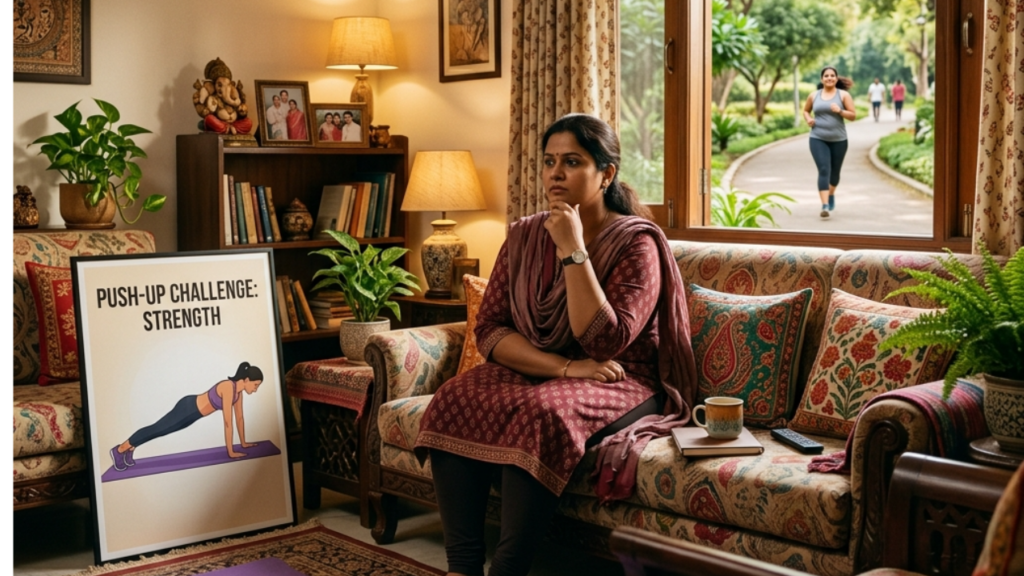

Why Indians Are Losing Muscle 10 Years Earlier Than the Global Average
It’s not genetics. It’s lifestyle – and it’s fixable.
Most people assume muscle loss is something that happens in your 60s. A natural part of getting old. Something to worry about later.
But for the average Indian professional, later is already here.
Research increasingly shows that Indians are experiencing significant muscle loss – sarcopenia – starting as early as their mid-30s, nearly a decade ahead of the global average. And the reasons have nothing to do with ethnicity or genetics. They have everything to do with how modern Indian professionals eat, move, and recover.
The Numbers Are Hard to Ignore
Studies conducted across Indian urban populations show that Indians tend to have lower muscle mass and higher body fat percentage at the same BMI as their Western counterparts. This phenomenon – sometimes called the “thin-fat Indian” profile – means that even people who look lean on the outside are carrying dangerously low functional muscle underneath.
The consequences aren’t just physical performance. Low muscle mass is directly linked to higher risk of type 2 diabetes, metabolic syndrome, hormonal imbalance, and poor immune function. Muscle isn’t just for lifting. It’s a metabolic organ – and most Indians are running on a depleted one.
Why It’s Happening Earlier
1. Chronically low protein intake
The traditional Indian diet – heavy on carbohydrates, light on complete protein – simply doesn’t deliver enough amino acids to sustain muscle tissue. Dal, rice, and roti are staples, but they don’t come close to the 1.6–2.2g of protein per kg of bodyweight needed to preserve muscle, especially under physical or metabolic stress. The average Indian adult consumes roughly 0.6–0.8g per kg per day – less than half of what muscle preservation requires.
2. Sedentary careers starting younger
India’s fastest-growing workforce is in IT, finance, consulting, and services – all desk-based, all sedentary. Professionals are entering these careers in their early 20s and spending the next decade sitting 8–10 hours a day. Without resistance training to counteract it, muscle loss begins quietly and compounds year on year.
3. Resistance training is still largely absent
Walking, yoga, and cricket are the dominant forms of physical activity in India. All valuable – none of them provide sufficient mechanical load to stimulate muscle protein synthesis. Without progressive resistance training, the body has no signal to maintain or build muscle. It simply doesn’t prioritise what it doesn’t need.
4. Sleep deprivation is cultural
Late-night work culture, long commutes, and the expectation of always-on availability means the average Indian professional is chronically undersleeping. Sleep is when the majority of muscle repair and growth hormone release occurs. Cutting it short consistently is one of the most reliable ways to accelerate muscle loss – and it’s normalised.
5. High chronic stress
Elevated cortisol – the stress hormone – is directly catabolic. It breaks muscle tissue down. Indian professionals dealing with high-pressure careers, financial stress, and family responsibility are often running chronically elevated cortisol levels, which quietly erodes the muscle base they’re not actively building.
What This Looks Like in Real Life
You’re in your mid-30s. You haven’t gained much visible weight. You still look roughly the same as you did at 28. But your energy is lower. Recovery takes longer. You feel physically weaker than your age should suggest. You get tired in ways you didn’t used to.
This is the thin-fat profile in action. The scale isn’t alarming. The mirror isn’t alarming. But the muscle underneath – the tissue that drives metabolism, protects joints, regulates blood sugar, and keeps you functional – is quietly depleting.
The Fix Is Specific, Not Generic
This isn’t solved by walking more or cutting carbs. It requires three targeted interventions:
Protein – deliberately, at every meal. Not a vague intention to “eat more protein.” Actual tracking, actual targets. Eggs at breakfast. Paneer or chicken at lunch. Greek yoghurt or whey as a snack. Dal alone isn’t enough.
Resistance training – three times per week minimum. Bodyweight at home counts. Squats, hinges, pushes, and pulls done with slow tempo and progressive difficulty. The goal is mechanical load, not calorie burn.
Recovery as a priority, not a luxury. Seven to eight hours of sleep is not laziness. It is the single most anabolic thing most Indian professionals are not doing.
The Muscle Clock Is Running
The professionals who address this in their 30s will move through their 40s and 50s with a fundamentally different physical foundation than those who don’t. Muscle built and preserved now is the asset that keeps your energy high, your metabolism functional, your joints protected, and your performance – at work and in life – intact.
The global average is already concerning. The Indian curve is steeper. But it bends with the right inputs.
DashFit is a muscle-focused fitness platform built for people dealing with stiffness, low mobility, slow metabolism, and pre-diabetes due to modern work life. Unlike most fitness apps that start with workouts, Dashfit starts with an initial assessment to gauge how your lifestyle is, which muscles are needed to remain strong and creates the fitness plan for week 1. The idea of the week 1 plan is not to give you a template that you can follow forever, but to identify which muscles are underactive, overworked, or compensating
The platform combines structured strength training, mobility correction, and coach-guided progress to rebuild functional muscle, improve insulin sensitivity, reduce stiffness, and support long-term metabolic health.
You should prefer DashFit because it doesn’t guess, generalise, or rely on motivation. It gives you clarity on your muscle health, trains your body based on how it actually works, and builds strength that fits real work schedules instead of fighting them.
Built for discipline. Powered by data.
DashFit – Performance fitness for the modern professional.