
A founder’s note from Shaswat Dash
I want to tell you about the moment I realised I had been doing everything right — and still got it completely wrong.
It was January 2023. I was switching from a functional training routine to structured strength training, and I was frustrated in a way I couldn’t quite articulate yet. But to explain why, I need to go back further.
The Kickboxer Who Thought He Had It Figured Out

In 2014, I was a state-level kickboxer. I trained hard, moved constantly, and lived by a routine that felt unbreakable. Kickboxing gave me discipline, identity, and — eventually — a body I was genuinely proud of.
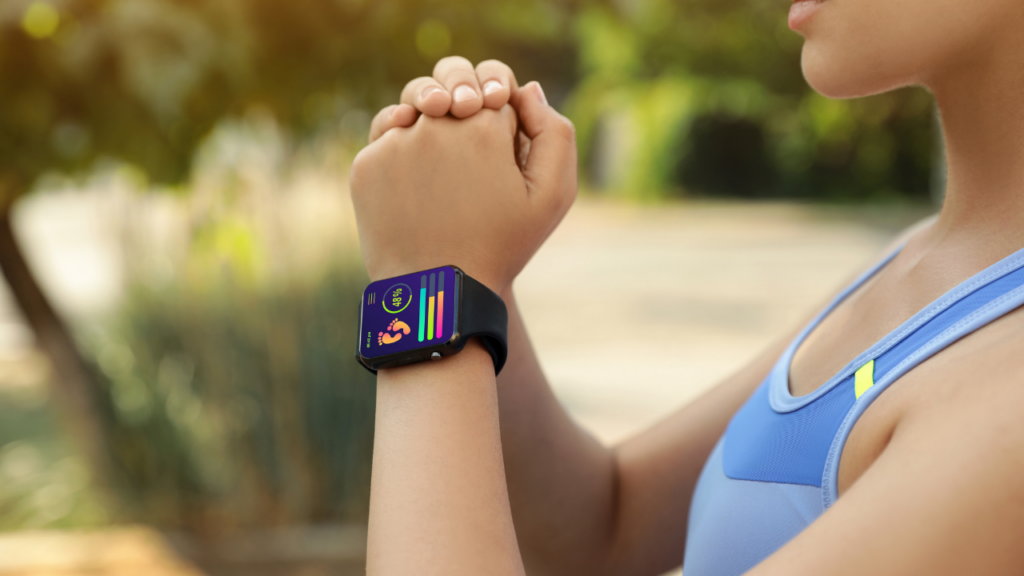
That last part mattered more than I like to admit. I had come from 105 kilograms. I had fought my way down to 78. For someone who had spent years being significantly overweight, finally looking the way I wanted to look was everything. I was thin. I was active. I wore a Fitbit that celebrated every milestone — 20,000 steps, fat burn zones, calorie counts, deep sleep percentages.
By every measure I had access to, I was doing brilliantly.
Then I injured my back. A disc bulge — the kind that stops you in your tracks and forces a conversation with an orthopaedic doctor you were not expecting to have.
His explanation was simple and devastating in equal measure: my lower back muscles were too weak.
I remember sitting with that for a long time. How? How does someone who trains as hard as I did, who moved as much as I did, end up with weak lower back muscles? The answer, I eventually understood, is that kickboxing had been training certain muscles very effectively — and completely ignoring others. The movements I had repeated thousands of times had built strength in specific patterns while leaving critical stabiliser muscles undertrained and unprotected.
My Fitbit had told me I was burning fat. It had celebrated my steps. It had tracked my sleep.
It had never once told me that my lower back was quietly becoming a liability.
The Question Nobody Could Answer
The doctor’s prescription was not rest. It was strength training — targeted, deliberate work to rebuild not just my lower back, but the surrounding muscles that had been neglected for years, so that the injury would not repeat itself. My recovery depended on it. Getting stronger was not optional. It was the only way forward.
And so I switched to strength training with an urgency I had never brought to exercise before. But almost immediately, I hit a wall — not physical, but informational.
My trainer was good. The exercises were sound. But the question that mattered most to me now was not “am I getting fitter?” It was: are these specific muscles actually getting stronger? Because my recovery depended on the answer being yes — and I had no way of knowing if it was.
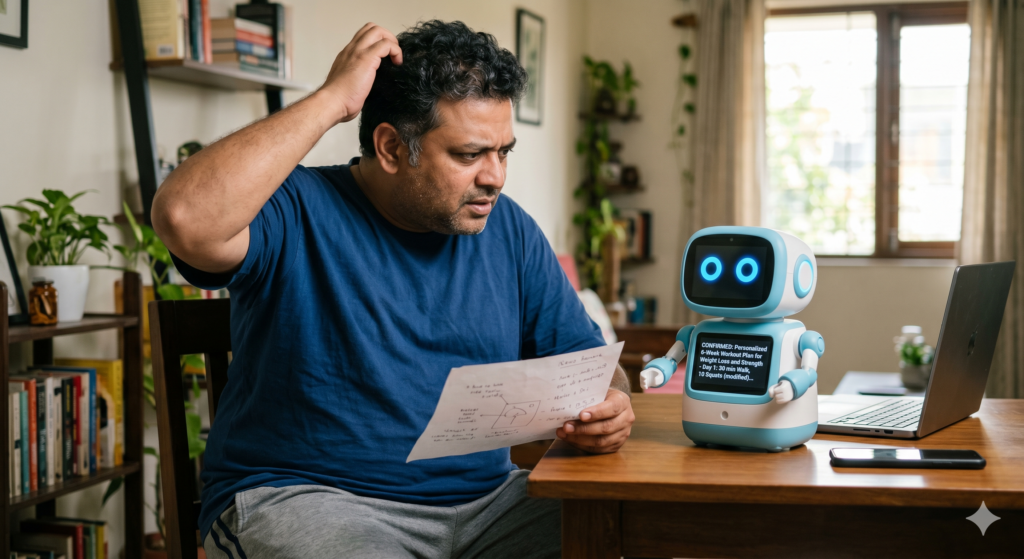
When I asked — by how much has this exercise trained a specific muscle? How has each muscle performed individually this session? Am I actually making progress where it counts? — the answers I got were vague at best.
“This exercise trains your upper back.” That was not enough for me. Not anymore. Not when my back was the thing I was trying to fix.
I noticed something that bothered me even more as I trained. When I changed the sequence of exercises within a session, my performance in the earlier exercises would be strong — but the later ones would suffer. Volume-based tracking — the standard way the fitness industry measures progress — doesn’t account for this. It doesn’t factor in muscle fatigue as a session progresses. It can’t tell you which specific muscle is the reason you plateaued on a particular exercise. It treats a tired muscle at the end of a session the same way it treats a fresh one at the beginning.
The data I had was giving me a number. It wasn’t giving me understanding.
I looked everywhere for a system that could do what I needed. Something that could track muscle activation across a session, account for fatigue, and tell me — with specificity — which muscles were working, which were lagging, and what to do about it.
I found nothing.
Building What Didn’t Exist
So I decided to build it.
What followed was months of theoretical research — studying exercise science, biomechanics, range of motion data, and the relationship between physical work done and muscle activation. I became, by my own admission, a nerd. I enjoyed every moment of it.
The first version of DashFit was built on a no-code platform. It was rough. But I needed to test the core idea: could a scoring mechanism track not just volume, but actual muscle activation in a way that was fair, precise, and actionable?
To test it, I needed people to use it. And to get people to use it, I needed to make it compelling.
That is how the DashFit Premier League was born.
The rules were simple: 40 minutes, split into two 20-minute halves. Choose any exercise you want. No more than 6 sets of any single exercise. The player who scores the highest wins.
I gave trophies to the first 30 participants. For a group of 10 trainers who competed, the winner took home ₹10,000 and the runner-up ₹5,000. It was competitive, it was fun — and more importantly, the people playing it gave me exactly what I needed: real feedback on where the scoring model was wrong.
What came out of that process was a level of complexity I hadn’t fully anticipated.
Every exercise has a different range of motion. Different range means different muscle activation. That meant each exercise had to be individually calibrated against 429 others just to make the score fair across the board. Then there were the differences between people — different heights, different weights, different limb lengths. Someone with longer arms does more physical work in a push-up than someone with shorter arms. Someone heavier does more physical work in a bodyweight squat. All of this had to be factored in for the score to mean something real.
We worked through it. We refined it. And eventually, we were ready.
We patented it.
What the Injury Was Really Telling Me
There is something I understand now that I did not understand in 2014.
My back injury was not bad luck. It was data — the kind my Fitbit could never collect. It was my body’s formal complaint that a critical set of muscles had been ignored for too long, and that the training I was so proud of had optimised for some things while leaving others dangerously unaddressed.
Research consistently shows that weak paraspinal and stabiliser muscles are directly linked to lumbar disc vulnerability. The muscles that support the spine — the multifidus, the erector spinae, the deep core — are not trained by most cardio or functional movement routines. They require specific, targeted stimulus. And without data telling you they are undertrained, you have no way of knowing they are at risk until the injury happens.
That is the gap DashFit was built to close. Not just for me — but for every working professional who is moving, training, and wearing a fitness tracker that celebrates steps and sleep while missing the thing that actually matters: which muscles are working, which are not, and what that means for their long-term health.
Why This Matters Beyond My Story
I lost a kickboxing career to an injury that, in hindsight, was preventable — if I had the right data.
I do not say that with bitterness. I say it because that experience is the reason DashFit exists, and because I know I am not alone in it. There are thousands of people in India who are moving every day — running, cycling, doing functional workouts, wearing expensive fitness devices — and accumulating the same invisible imbalances I had. Muscles that are overtrained on one side. Stabilisers that have never been properly activated. Bodies that look functional from the outside while specific, critical muscle groups quietly weaken.
The scale doesn’t show this. The step counter doesn’t show this. The fat burn zone notification definitely doesn’t show this.
A muscle score does.
DashFit starts every client with an assessment — not a workout. It identifies which muscles are underactive, which are overworked, and which are compensating for the ones that have gone undertrained. It builds a plan around that reality, adapts it week by week based on data, and tracks progress the way I always wanted it tracked — not by volume, but by actual muscle activation.
I suffered a personal injury and lost the career I loved. But when I see our clients getting stronger, moving better, and understanding their bodies in a way they never could before — I know it was worth it.
The data exists now. Nobody has to guess anymore.
Built for discipline. Powered by data. DashFit — Performance fitness for the modern professional.