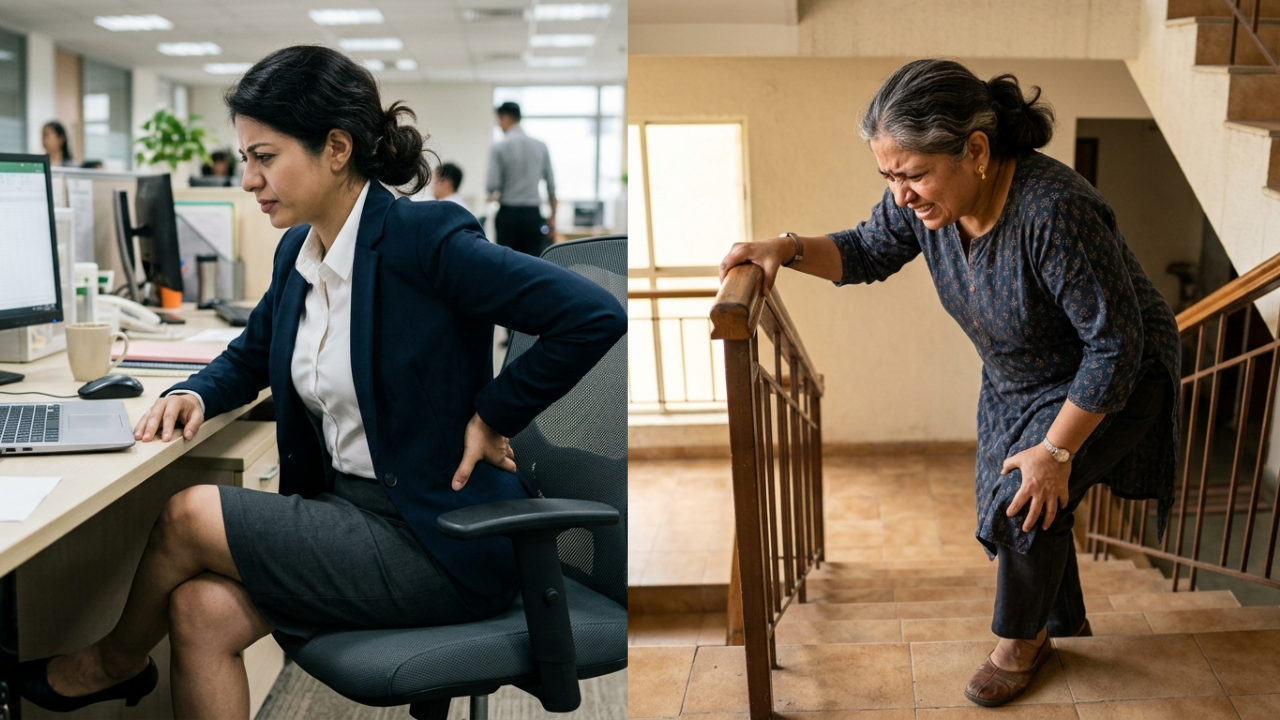
There is a conversation happening in Indian fitness spaces that is almost entirely centred around men.
The research studies quoted, the transformation stories shared, the workout programs designed, the protein intake recommendations made — the default subject is almost always male. Women are treated as a secondary audience, given scaled-down versions of the same advice, and told to focus on weight loss and flexibility rather than strength.
This is not just a marketing problem. It is a health problem. Because the biology of muscle loss in women is fundamentally different from that of men — it starts earlier, accelerates more sharply, and carries consequences that are specific, serious, and almost entirely avoidable with the right information.
Most women do not have that information. This blog is an attempt to change that.
Women Start Losing Muscle Earlier Than Most People Realize

The widely understood narrative is that muscle loss — sarcopenia — is a problem that begins in your 40s or 50s and gradually worsens from there. For men, that narrative is roughly accurate.
For women, it begins sooner and the trajectory is steeper.
Longitudinal and cross-sectional studies consistently demonstrate a reduction in lean and muscle mass across the menopausal transition — with reductions of approximately 2.5% in perimenopausal women and 5.7% in postmenopausal women compared to premenopausal women. But the process does not wait for menopause to begin. Research shows that muscle mass begins declining in the late 20s and early 30s in sedentary women — meaning that the working professional in her mid-30s who is not actively building and maintaining muscle is already losing it.
What makes this different for women is not just timing — it is the mechanism. Females demonstrate a distinct pattern of muscle ageing compared to males, largely driven by menopause, when the production of endogenous sex hormones declines. That hormonal shift does something specific and damaging to muscle tissue.
The Estrogen Problem — What Your Hormones Are Doing to Your Muscles

Estrogen is not just a reproductive hormone. It is a critical regulator of muscle health.
Estrogen plays a crucial role in skeletal muscle homeostasis — it enhances muscle protein synthesis and supports the muscle’s ability to repair itself after use. When estrogen levels decline, the muscle becomes less sensitive to anabolic stimuli, meaning it responds less effectively to exercise and nutrition, and accelerates the process of muscle wasting.
A landmark study published in The Journal of Physiology followed women aged 18 to 80, measuring muscle tissue, hormone levels, and physical performance. The results were stark: a sharp decline in strength begins in the 40s when hormonal changes speed up muscle loss. Crucially, the study found that this was not simply a result of reduced activity — it was driven by changes within the muscle itself. The muscle becomes less able to repair itself and less efficient at generating force.
The muscles most vulnerable to this process are the quadriceps — the large muscles at the front of the thigh that power walking, climbing stairs, and maintaining balance. These muscles are rich in fast-twitch fibres, which provide power and quick reactions. They are sensitive to hormonal shifts, and without enough estrogen, they shrink more quickly and accumulate fat within the tissue itself.
Women experience more severe reductions in both muscle and bone mass compared to men, with differences in the severity of sarcopenia between the sexes directly associated with the reduction in estrogen levels that occurs with menopause.
What this means in practical terms: a woman in her early 40s who is not actively strength training is not simply “getting a bit less fit.” She is losing the very tissue that regulates her metabolism, protects her joints, manages her blood sugar, and determines her functional independence in later life — at a rate her male counterpart simply does not experience.
The Indian Woman’s Specific Disadvantage
The biological challenge is significant on its own. The social and cultural context that most Indian women navigate makes it considerably worse.
A 2024 State of Sports and Physical Activity report, authored by Sports and Society Accelerator and Dalberg Advisors, found something that should be treated as a public health concern: 40% of Indian women cite domestic chores as their primary physical activity, and 12% fewer women engage in muscle-strengthening exercises compared to men. The most pronounced gender gaps are observed in the 15 to 30 age group — precisely the years when establishing strength training habits matters most for long-term muscle health.
Let that settle for a moment. Four in ten Indian women are counting housework as their primary form of exercise. And the gap in strength training participation is not a small one.
This is not laziness. It is structure. In India, patriarchal norms restrict women to domestic roles, limiting their opportunities for physical activity. Cultural norms and gender roles significantly influence physical activity levels, with women expected to prioritise household duties and caregiving over their own health and exercise.
A working Indian woman in her 30s is, in most households, managing a full professional workload and the majority of domestic responsibilities simultaneously. The time, energy, and social permission to prioritise structured exercise — particularly strength training, which is still largely coded as masculine in Indian fitness culture — is simply not there for most women.
Research tracking physical activity across more than two decades found that only 20% of women completed a weekly strength-training session, compared to 28% of men. The gap is consistent, persistent, and consequential.
Domestic Work Is Not Exercise — And Confusing the Two Is Dangerous

This needs to be said clearly, because it is one of the most common misconceptions we encounter.
Cooking, cleaning, carrying groceries, managing children — these involve movement. But they do not provide the mechanical stimulus that muscles need to maintain mass and strength. They do not challenge the neuromuscular system in the way that resistance training does. They do not trigger the muscle protein synthesis that protects against sarcopenia.
A woman who spends 4 hours a day on domestic activity but does no structured strength training is not protected from muscle loss. She may actually be at higher risk — because the repetitive, low-resistance nature of domestic tasks can create muscle imbalances, overwork specific joints, and leave stabiliser muscles chronically undertrained.
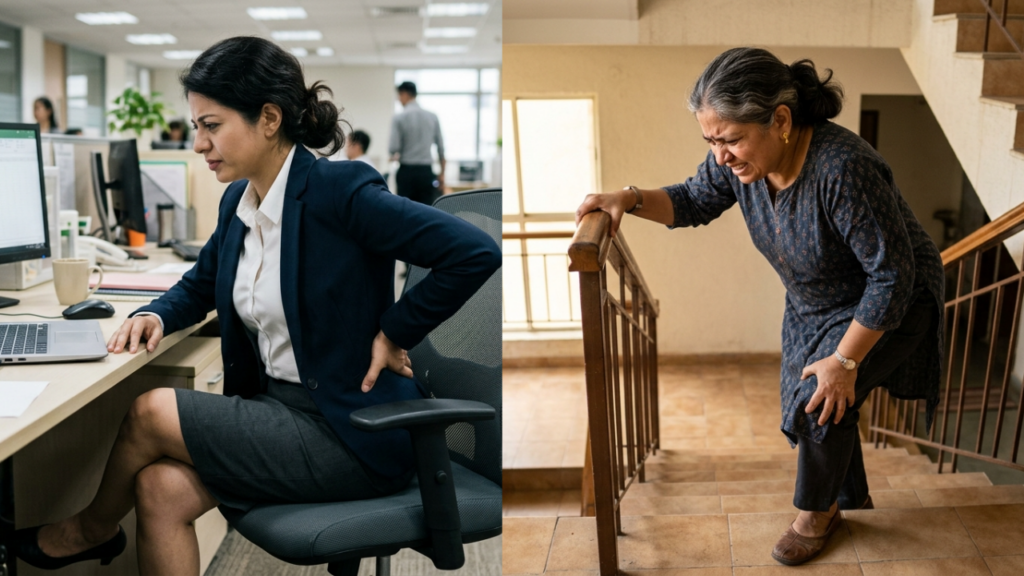
The back pain, the knee problems, the shoulder stiffness, the fatigue that many Indian women in their 30s and 40s normalise as “just life” — these are often not caused by too much activity. They are caused by the wrong kind of activity, combined with a complete absence of the specific kind that would actually help.
The Consequences of Getting This Wrong
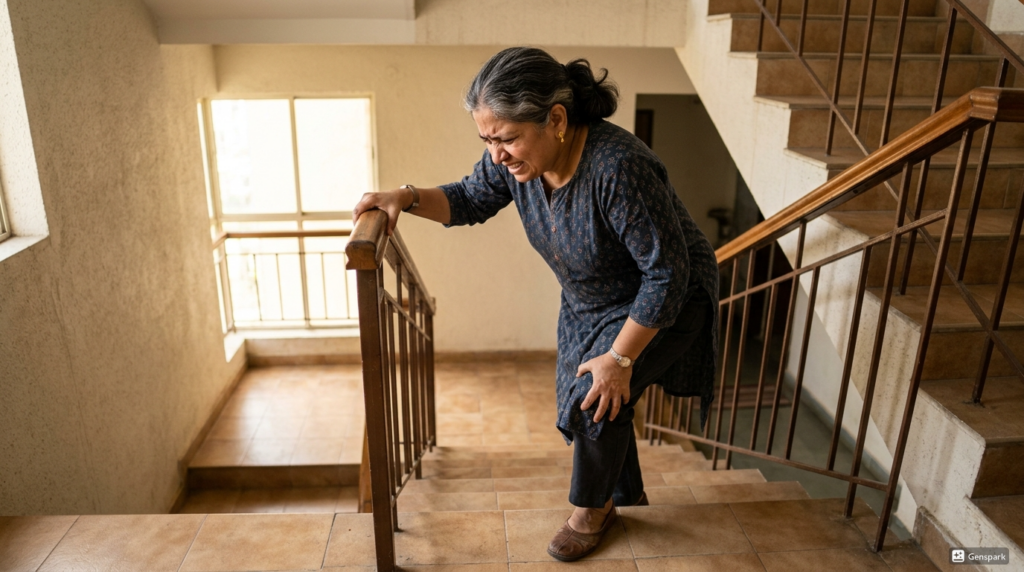
The stakes here go well beyond aesthetics or fitness goals.
Women who perform regular muscle-strengthening activity have a 30% lower risk of death from heart disease — compared to an 11% risk reduction for men doing the same activity. Women who exercise regularly have a 24% lower risk of all-cause mortality compared to inactive women, against a 15% reduction for men.
Read that again. Women gain proportionally more from exercise than men do — in terms of survival, cardiovascular protection, and long-term health outcomes. The gap in benefit is significant. Which means the cost of not exercising is also proportionally higher for women.
Weak quadriceps in particular affect balance, bone health, and independence. Strong quadriceps are a good predictor of whether a woman will maintain mobility or experience falls and fractures post-menopause. In a country where older women’s healthcare needs are chronically under-prioritised and independence is increasingly fragile in later life, this is not an abstract concern.
The woman who does not build muscle in her 30s and 40s is not just risking how she looks or feels today. She is making decisions about who she will be at 60 and 70 — whether she will be mobile, independent, metabolically healthy, and capable of living the life she wants. Or whether she will be managing conditions that compounded quietly for decades while she was told that her domestic activity was enough.
What Indian Women Actually Need
The answer is not complex, though the barriers to it are real.
Structured strength training — two to three times a week, targeting major muscle groups with progressive resistance — is the single most effective intervention for preserving muscle mass, improving metabolic health, and protecting against the hormonal muscle loss that accelerates through perimenopause and beyond. This is not optional for women. It is essential and it can be done at home too.
Adequate protein intake matters alongside it — for exactly the reasons we have written about before. Protein without training does not build muscle. But training without protein cannot complete the repair process. Indian women’s diets, which are often low in protein and high in carbohydrates, need specific attention here.
And the social permission to prioritise this — to carve out time for structured movement without guilt, without the expectation that family obligations always come first, without the fitness space feeling intimidating or unwelcoming — is something that both individuals and the culture around them need to actively work toward.
What DashFit Does Differently for Women
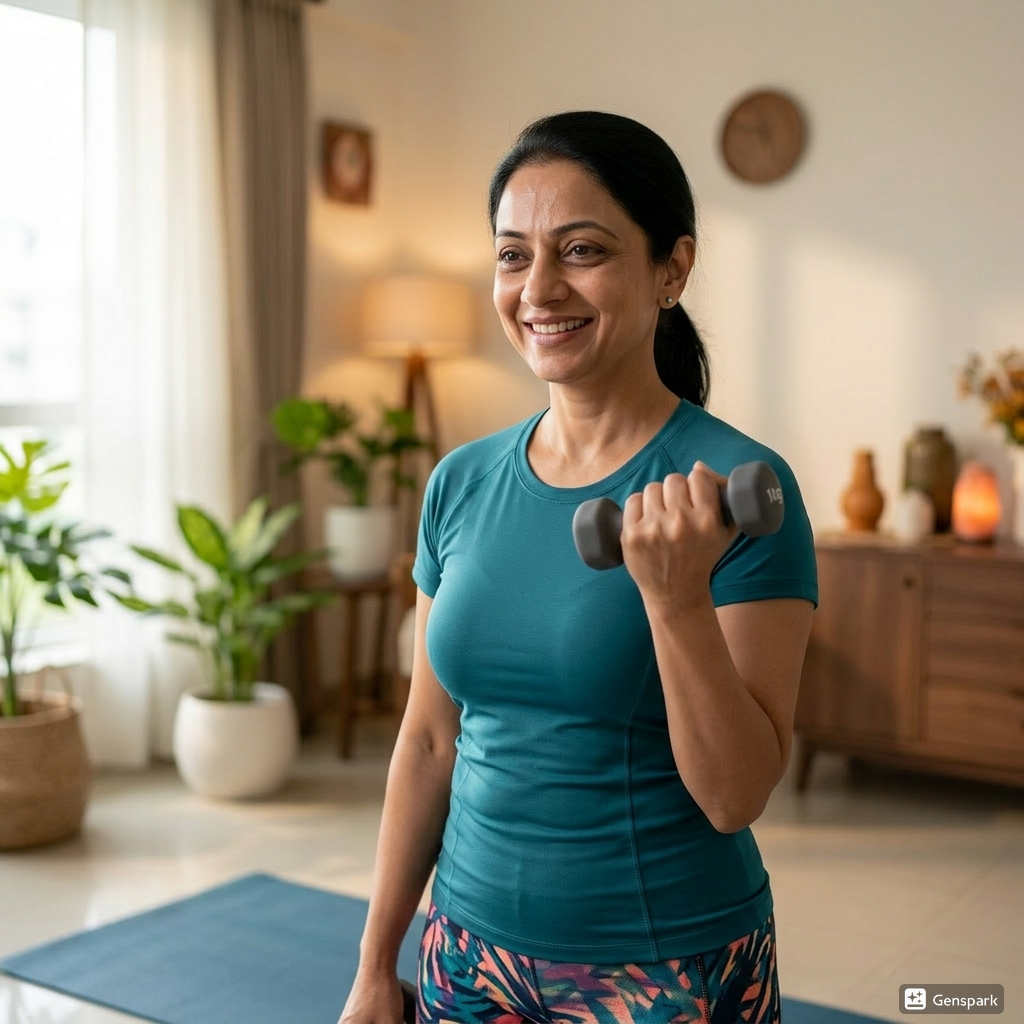
DashFit starts with a body composition assessment — because the number on the scale tells a woman almost nothing useful about her actual muscle health, her visceral fat levels, or where her body is in the muscle loss trajectory.
From there, every plan is built around the specific muscles that need attention — not a generic programme, but one that adapts weekly based on what the data shows. For women navigating the hormonal shifts of their 30s and 40s, the unpredictable schedule of a working professional, and the social friction of prioritising their own health in a culture that does not always make that easy — a plan that works around real life is the only kind that actually works.
The biology is not in your favour. The culture adds to the challenge. But neither of those things is permanent — and the window to address them is open right now.
Built for discipline. Powered by data. DashFit — Performance fitness for the modern professional.