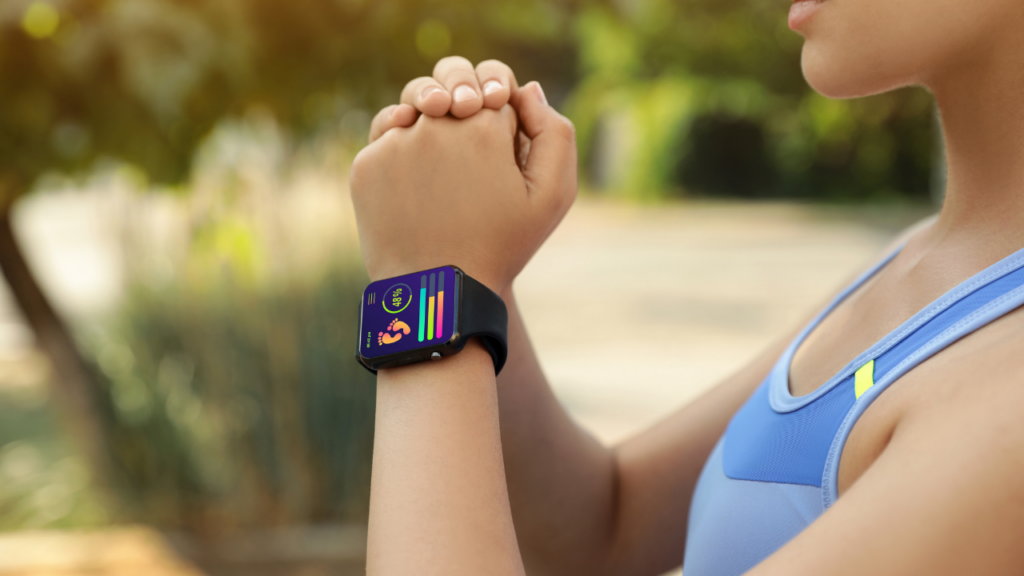
Your watch buzzes a little after 6 PM. Ten thousand steps. A tiny celebration animation, maybe a ring that fills up green. For a second, it feels like you did something for your body today.
You probably didn’t do the one thing that matters most.
This isn’t an attack on walking. Walking is good. But the step count sitting on your wrist has quietly become the way an entire generation of working professionals measures whether they’re “healthy” — and it’s measuring the wrong thing. Worse, it’s telling you a comforting story while the thing that actually determines your metabolism, your blood sugar, and how you’ll age is sliding in the opposite direction.
Here’s what your tracker isn’t telling you.
The number you’re chasing was invented to sell a gadget

There is no clinical study behind 10,000 steps. There never was.
The number comes from a 1965 marketing campaign. A Japanese company, Yamasa, launched one of the first consumer pedometers ahead of the buzz around the 1964 Tokyo Olympics and called it the Manpo-kei — literally, the “10,000-steps meter.” Part of the reason they landed on 10,000 was that the Japanese character for the number (万) loosely resembles a person walking, and round numbers sell products. That’s the entire origin story. As Harvard researcher Dr. I-Min Lee, who traced the history, has put it plainly, the figure was a marketing tool, not a medical recommendation.
You’ve been chasing a slogan from a 60-year-old ad campaign and treating it like a prescription.
What the research actually says

When scientists finally went looking for evidence behind the magic number, they found something more useful — and less flattering to your step goal.
A 2022 meta-analysis published in The Lancet Public Health, pooling data from 15 international studies, found that more steps were associated with lower risk of death, but the benefit plateaued far below 10,000 — at roughly 7,500 steps for older adults, and somewhere in the 8,000–12,000 range across the broader population. Other large reviews have found meaningful benefit kicking in at as few as 4,000 steps a day.
In other words: the gap between 7,000 steps and 10,000 steps barely moves the needle on the outcome you actually care about. The number on your wrist has been making you feel either virtuous or guilty over a difference that the science says is mostly noise.
And there’s a second blind spot. Steps count quantity, never intensity. Ten thousand steps shuffled across an air-conditioned office over nine hours is not remotely the same stimulus as a brisk, deliberate effort — but your tracker scores them identically. This is why global health bodies like the WHO recommend a weekly dose of moderate activity rather than a daily step target. The count is easy to measure, which is exactly why it caught on. Easy to measure is not the same as worth measuring.
Steps measure movement. They don’t measure muscle.

This is the real problem, and it’s the one no fitness tracker on the market is built to solve.
After 30, the human body begins shedding muscle — slowly at first, then faster — a process called sarcopenia. Muscle is what keeps your metabolism running, your blood sugar in check, and your body capable. Losing it is the quiet engine behind the fatigue, the slow metabolism, and the lifestyle diseases that arrive a decade early in Indian professionals.
Here’s the uncomfortable part: walking does almost nothing to stop it.
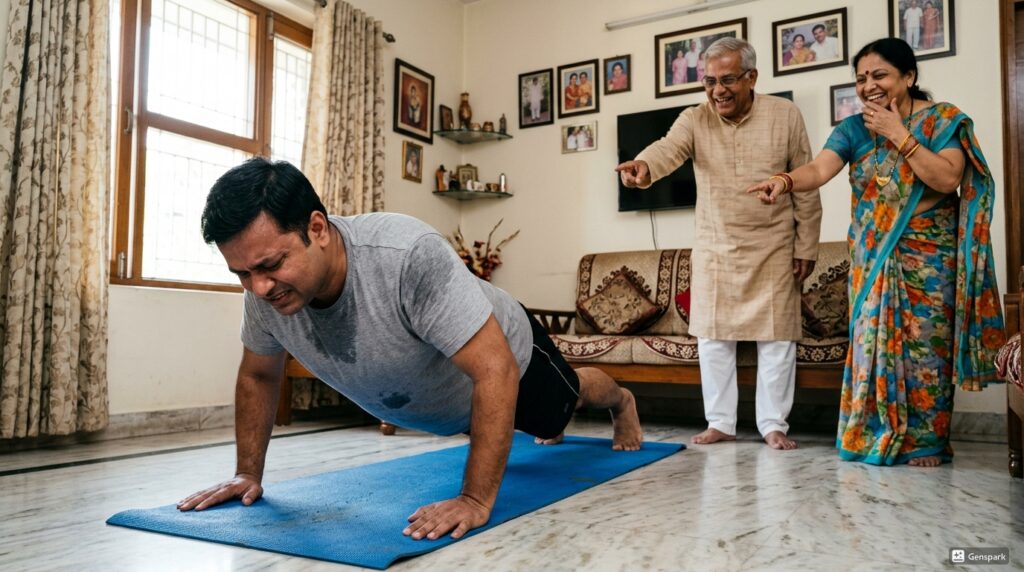
Aerobic movement like walking is genuinely good for your heart and your head, but it is a weak signal for building or even holding on to muscle. The research is consistent on this — review after review finds that resistance training, not aerobic exercise, is the intervention that actually preserves and rebuilds muscle mass as you age. Clinicians who treat sarcopenia say it directly: cardio is valuable, but it’s far less effective at maintaining muscle than strength work that puts real load through your tissue.
So picture the professional hitting 10,000 steps every single day, feeling on top of their health — while quietly losing muscle year after year because nothing in their routine is loading it. The tracker celebrates. The body declines. Both things are true at once, and only one of them shows up on the screen.
The Fitbit problem
When DashFit’s founder was recovering from a disc injury caused by weak lower-back muscles, he didn’t need to know how many steps he’d taken. He needed to know whether the specific muscles he was rehabbing were actually getting stronger. His Fitbit — like every step tracker — had no answer. It could count movement all day long and tell him nothing about the only variable that mattered to his recovery.
That gap is the whole point. A step counter is a movement log. It was never designed to tell you anything about your Muscle Score, your body composition, or whether the work you’re doing is building you up or just keeping you busy. Counting steps to assess your health is like checking your bank balance by counting how many times you opened the app.
What to track instead
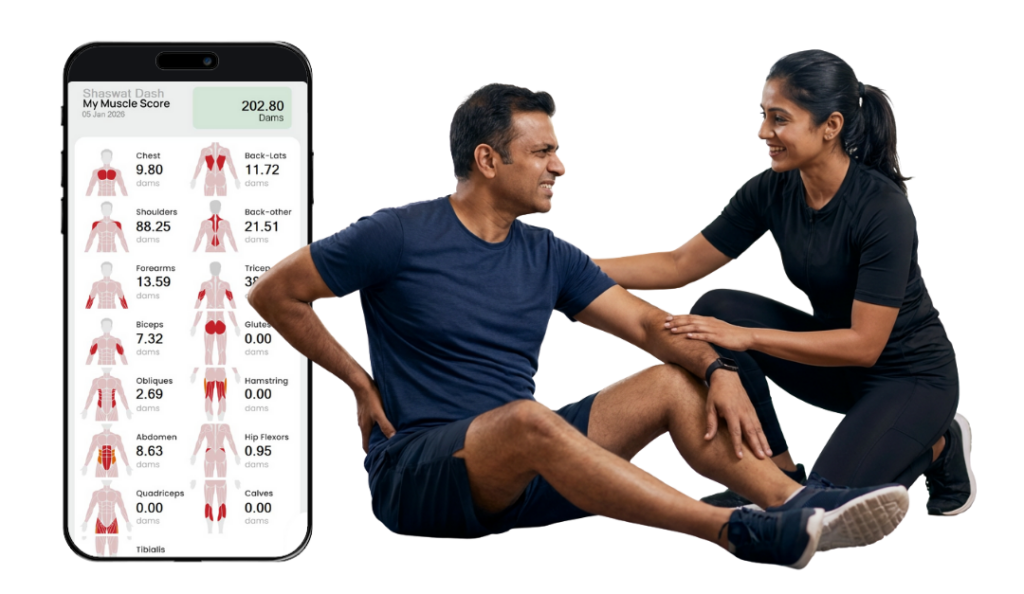
If the scale is the wrong tool — and we’ve argued before that it is — your step count is its quieter cousin. Both reward effort that looks like progress without measuring whether progress is happening.
The honest alternative is harder to fake. It starts with a body composition assessment: how much muscle you actually carry, how much visceral fat is hiding behind a normal weight, where you really stand. From there, your DAMS score (DashFit Activated Muscle Score) tracks which muscles are genuinely being worked week to week, so your plan adapts to your body’s data instead of a number some company printed on a dial in 1965.
Keep walking. It’s good for you. Just stop letting it tell you you’re done. The buzz on your wrist at 6 PM is the easy win. The muscle you build — slowly, deliberately, under load — is the one that decides how the next thirty years go.
Track the thing that’s actually keeping you alive.
Built for discipline. Powered by data. DashFit — Performance fitness for the modern professional.