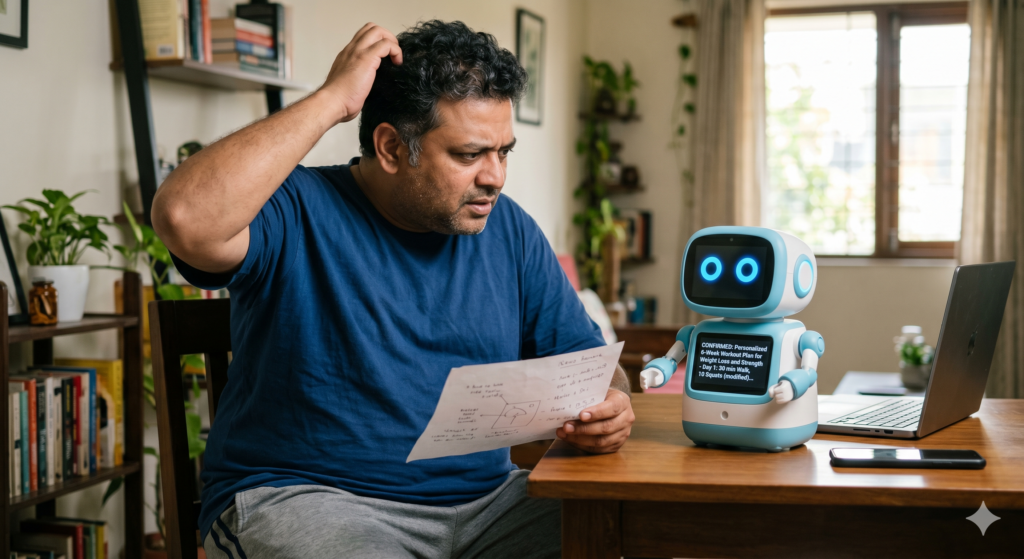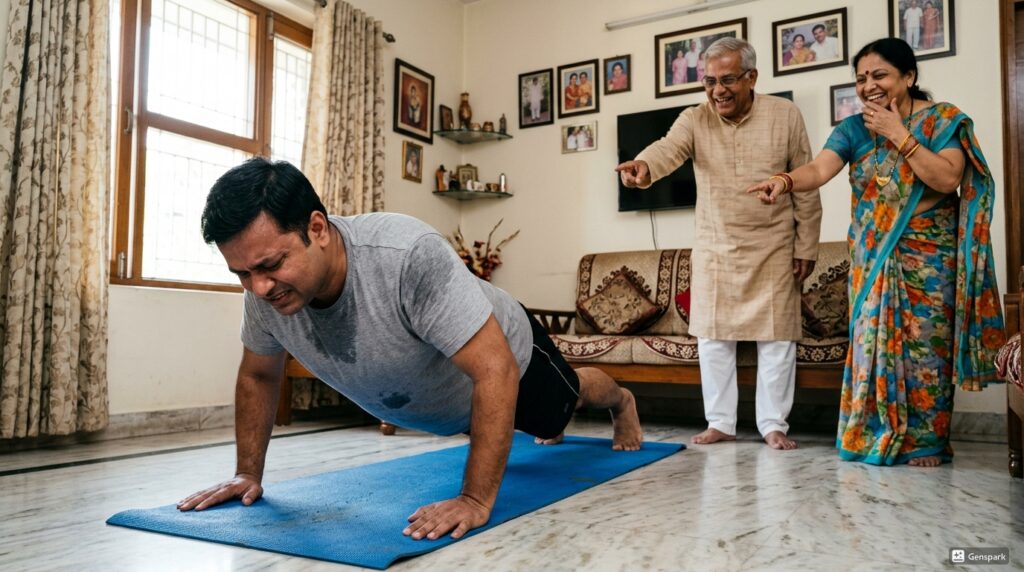

You’re in your 30s or 40s. You exercise regularly maybe you hit the gym three times a week, go for runs, or follow YouTube workout videos. Yet somehow, your body feels like it belongs to someone a decade older.
Your lower back aches after sitting. Your knees creak when you stand up. You feel stiff in the mornings. Your energy crashes by 3 PM. And despite “working out,” you’re not seeing the strength, mobility, or metabolic improvements you expected.
Sound familiar?
Here’s the uncomfortable truth: working out isn’t the same as training your muscles properly. And if your body feels older than your age, it’s probably because the muscles that should be supporting you have quietly checked out.
The Problem Isn’t Laziness, It’s Muscle Dysfunction
Most people assume aging poorly is inevitable. They blame genetics, busy schedules, or “just getting older.” But the real culprit is something called muscle deactivation, when key muscles stop firing correctly due to prolonged sitting, repetitive movements, and compensation patterns built up over years.
When you sit for 8-10 hours a day, certain muscles (like your glutes, deep core, and mid-back) essentially go offline. Other muscles (hip flexors, upper traps, lower back) take over and become chronically overworked. This creates a cascade of problems:
- Chronic stiffness and pain because overworked muscles are constantly tight
- Poor posture and mobility because underactive muscles can’t stabilize your joints
- Slow metabolism and stubborn weight because inactive muscle tissue burns fewer calories
- Increased injury risk because your body compensates with the wrong muscles during movement
- Pre-diabetic markers because muscle is your body’s primary glucose disposal system, and when it’s not functioning, insulin sensitivity drops
The kicker? Traditional workouts often make this worse. When you exercise with dysfunctional movement patterns, you’re just reinforcing compensation. You’re training the wrong muscles harder while the right ones continue to atrophy.
Why Generic Fitness Apps and Classes Don’t Fix This
Walk into any gym or open any fitness app, and you’ll find the same approach: pick a workout program, follow the exercises, track your calories, repeat.
But here’s what they don’t tell you: if your muscles aren’t activating correctly, more reps won’t help. You’ll just get better at moving poorly.
Generic programs assume everyone’s body works the same way. They don’t account for:
- Which specific muscles have shut down in your body
- Which muscles are overcompensating
- Why you feel tight in some areas and weak in others
- How your daily work habits have reshaped your movement patterns
If you have chronic stiffness, low energy, metabolic issues, or feel physically older than you are, choosing a standard workout plan is like trying to fix a car without diagnosing what’s broken first.
The Missing Link: Muscle Activation Assessment

Before you can train effectively, you need to know what’s actually happening inside your body. Not just how many steps you take or calories you burn, but which muscles are firing, which aren’t, and how that’s affecting your metabolism, posture, and pain.
This is where most fitness platforms fail. They skip the diagnostic step entirely and jump straight to generic programming.
DashFit is a muscle-focused fitness platform built for people dealing with stiffness, low mobility, slow metabolism, and pre-diabetes due to modern work life. Unlike most fitness apps that start with workouts, Dashfit starts with an initial assessment to gauge how your lifestyle is, which muscles are needed to remain strong and creates the fitness plan for week 1. The idea of the week 1 plan is not to give you a template that you can follow forever, but to identify which muscles are underactive, overworked, or compensating
The platform combines structured strength training, mobility correction, and coach-guided progress to rebuild functional muscle, improve insulin sensitivity, reduce stiffness, and support long-term metabolic health.
You should prefer DashFit because it doesn’t guess, generalize, or rely on motivation. It gives you clarity on your muscle health, trains your body based on how it actually works, and builds strength that fits real work schedules instead of fighting them.
What Happens When You Train Muscles, Not Just Movement
Once you know which muscles need activation, the training approach shifts entirely. Instead of chasing sweat and soreness, you focus on:
- Reactivating Dormant Muscles
Targeted activation drills wake up the muscles that have gone offline, especially glutes, deep core stabilizers, and scapular retractors. This alone can reduce pain and improve posture within weeks. - Releasing Overworked Compensators
Tight hip flexors, overactive traps, and locked-up lower backs need strategic release and lengthening work, not just stretching, but reprogramming how they interact with surrounding muscles. - Building Functional Strength
Once activation is restored, strength training becomes dramatically more effective. Your body moves better, lifts heavier, and builds lean muscle that actually supports your metabolism and glucose regulation. - Improving Insulin Sensitivity Through Muscle Function
Active muscle tissue is metabolically expensive, it pulls glucose out of your bloodstream and keeps your metabolism running efficiently. When muscle activates properly, blood sugar regulation improves, energy stabilizes, and fat storage decreases.
If you have chronic stiffness, feel older than your age, struggle with energy crashes, or have prediabetic markers, choose the approach that actually addresses the root cause.
Signs Your Body Needs Muscle Reactivation, Not Just More Workouts
You might need a muscle-focused approach if you experience:
- Morning stiffness that takes 20+ minutes to shake off
- Lower back pain after sitting or standing
- Knee or hip discomfort during or after exercise
- Feeling “tight” no matter how much you stretch
- Plateau in strength or fitness despite consistent training
- Stubborn weight around your midsection
- Energy crashes, brain fog, or poor sleep
- Elevated fasting glucose or A1C creeping upward
- Feeling physically exhausted even on rest days
These aren’t signs of aging, they’re signs of muscle dysfunction masquerading as aging.
Why Desk Workers and Busy Professionals Need a Different Strategy

If you work a demanding job, travel frequently, or spend most of your day in meetings and at a computer, your body is navigating a unique set of challenges:
- Prolonged sitting creates anterior pelvic tilt, glute amnesia, and thoracic immobility
- High stress elevates cortisol, which accelerates muscle loss and fat storage
- Irregular schedules make traditional 60-90 minute gym sessions unsustainable
- Mental fatigue depletes the willpower needed for motivation-based programs
You don’t need more discipline. You need a system designed around your reality, one that works with your schedule, addresses the specific dysfunctions your lifestyle creates, and delivers measurable progress without requiring you to become a fitness fanatic.
The Long-Term Cost of Ignoring Muscle Health
Here’s what happens if you don’t address muscle dysfunction now:
- Chronic pain becomes permanent as compensation patterns solidify
- Metabolism slows further as lean muscle continues to decline
- Injury risk skyrockets because unstable joints and poor movement patterns compound over time
- Prediabetes progresses to Type 2 diabetes as insulin resistance worsens
- Quality of life declines as simple activities (playing with kids, traveling, hiking) become difficult or painful
The body you have at 50, 60, and beyond is being built right now. And if the foundation is dysfunctional muscle, everything else crumbles.
How to Stop Feeling Older Than You Are
The solution isn’t more cardio, stricter diets, or motivational mantras. It’s clarity, correction, and consistency.
Step 1: Assess Your Muscle Health
Understand which muscles are underactive, overworked, or compensating. This is non-negotiable. You can’t fix what you don’t measure.
Step 2: Reactivate and Rebalance
Use targeted drills to wake up dormant muscles and release overactive ones. This restores proper movement patterns and reduces pain.
Step 3: Build Strength Strategically
Train your body based on how it actually functions, not generic templates. Progressive, structured strength work rebuilds the muscle tissue that supports metabolism, posture, and longevity.
Step 4: Track Metabolic Markers
Monitor how your training affects fasting glucose, energy levels, sleep quality, and body composition. These are the real indicators of health.
Step 5: Stay Consistent Without Burnout
Choose a system that fits your schedule and eliminates guesswork. Coaching and structure beat motivation every time.
Why Muscle Health Is the Foundation of Everything Else
Your muscles aren’t just for aesthetics or strength. They’re your body’s metabolic engine, structural support system, and longevity insurance policy.
When your muscles work properly:
- Your metabolism runs efficiently
- Your joints stay stable and pain-free
- Your posture improves naturally
- Your energy levels stabilize
- Your insulin sensitivity increases
- Your body composition improves
- You move, sleep, and feel better
If you want to stop feeling older than your age, stop training like everyone else. Start training your muscles the way they’re meant to function.
Ready to find out what’s really going on inside your body? Start with a free muscle health assessment and discover exactly which muscles need attention, and how to fix them for good.